Best Tender Tracking Software in India 2026: Features, Benefits & How to Choose
Introduction Finding the right government or private tender can open new business opportunities for manufacturers, contractors, suppliers, distributors, and service providers.…
Introduction
Finding the right government or private tender can open new business opportunities for manufacturers, contractors, suppliers, distributors, and service providers. However, the tendering process involves more than discovering an opportunity. Businesses must review eligibility conditions, understand technical specifications, calculate costs, prepare supporting documents, monitor deadlines, and submit bids according to the buyer's requirements.
When these activities are managed through spreadsheets, emails, and manual searches, important information can be overlooked. A missed deadline, incomplete document, or misunderstood eligibility condition can prevent an otherwise qualified business from participating successfully.
This is where tender tracking software becomes valuable. It helps businesses organize tender opportunities, monitor important dates, analyze documents, and coordinate bid preparation from a centralized workspace.
In 2026, AI-powered solutions are making tender management more efficient by helping teams extract important information from lengthy documents, identify relevant opportunities, and organize bid-related tasks. Choosing the right solution can help businesses reduce repetitive work and make better-informed bidding decisions.
This guide explains the features, benefits, pricing considerations, and selection criteria to consider when evaluating tender management solutions in India.
What Is Tender Tracking Software?
Tender tracking software is a digital solution that helps organizations monitor tender opportunities and manage the activities associated with bidding. Depending on the platform, it may support tender discovery, document analysis, eligibility checks, deadline reminders, bid preparation, supplier coordination, and submission tracking.
Instead of checking multiple websites and maintaining separate spreadsheets, businesses can use a centralized system to organize relevant opportunities and follow their progress.
For example, a company supplying electrical equipment may need to monitor tenders from government departments, public sector undertakings, infrastructure companies, and private organizations. A suitable system can help its team filter opportunities by product category, location, buyer, estimated value, and other relevant criteria.
Tender tracking and tender management are related but different functions. Tracking primarily focuses on identifying opportunities, monitoring status, and managing deadlines. A broader tender management solution may cover the entire process, from discovery and qualification to bid preparation, evaluation, and contract-related follow-up.
Why Indian Businesses Need Better Tender Management in 2026
India's public procurement environment includes multiple electronic platforms and organization-specific procurement systems. The Government of India's Central Public Procurement Portal provides search options for tender information, including organization, tender reference, work or item title, location, and date criteria. Businesses using the Government e-Marketplace must also understand its specific bidding workflows.
Managing opportunities across different sources creates several operational challenges.
1. Finding relevant opportunities takes time
A business may need to review multiple notices before identifying a tender that matches its products, services, location, and capabilities. Broad searches can produce irrelevant results, while narrow searches may miss suitable opportunities.
2. Tender documents contain detailed conditions
Tender notices and their supporting documents can contain eligibility requirements, technical specifications, financial conditions, submission instructions, and contractual clauses. Reviewing these manually requires time and attention.
3. Deadlines are difficult to coordinate
A single tender may involve a pre-bid meeting, clarification deadline, document submission date, and final bid deadline. Teams need a reliable way to track these milestones.
4. Teams work with scattered information
When documents, pricing calculations, approvals, and communications are stored in different locations, employees may struggle to identify the latest version or current status.
5. Not every tender is worth pursuing
A tender may look attractive but require certifications, turnover, experience, resources, or financial commitments that a business cannot meet. Screening opportunities before investing time in bid preparation is essential.
A well-selected tender AI tool can help address these challenges by combining structured tracking with document analysis and workflow management.
Essential Features of Tender Tracking Software
The best solution is not necessarily the one with the largest number of features. It is the one that addresses your team's most important tendering problems and fits your existing workflow.
1. Tender Discovery and Advanced Search
Tender discovery helps businesses find opportunities relevant to their products, services, and capabilities.
Look for search and filtering options such as:
- Keywords and product categories
- Buyer, department, or organization
- State, city, or geographical region
- Tender reference number
- Estimated contract value, where available
- Publication and closing dates
- Relevant industries and service categories
Effective discovery reduces the time spent reviewing unrelated notices. Before selecting a platform, confirm which government and private procurement sources it actually covers, how frequently information is refreshed, and whether source links are provided.
2. Automated Tender Alerts
Tender alerts notify users when relevant opportunities or important updates become available. Depending on the solution, alerts may be delivered through email, in-app notifications, or other supported channels.
A useful alert system should allow teams to configure relevant searches, prioritize opportunities, and monitor closing dates.
It should also help users distinguish between a newly published tender and an update to an existing notice. Alerts are most useful when they lead to actionable information rather than creating another stream of notifications to manage.
3. AI-Powered Tender Document Analysis
Traditional document review can be time-consuming, particularly when a tender includes lengthy PDFs, multiple annexures, and detailed technical conditions.
An AI-powered tender AI software solution may help extract information such as:
- Eligibility and qualification criteria
- Scope of work and technical specifications
- Important dates and submission instructions
- Earnest Money Deposit (EMD) requirements, where applicable
- Required certificates and supporting documents
- Contractual obligations and potentially significant risks
The objective is to help the team locate important information faster.
AI-generated findings should still be checked against the original tender documents. A missing condition or incorrectly interpreted clause can have serious consequences, so final eligibility and compliance decisions should remain with qualified team members.
4. BOQ Extraction and Analysis
A Bill of Quantities (BOQ) can contain item descriptions, quantities, units, specifications, and pricing-related information.
When these details are embedded in lengthy or complex documents, manually transferring them into working spreadsheets can increase the chance of errors.
Software with BOQ extraction capabilities can help convert supported documents into structured information for further review. This may make it easier for estimation and commercial teams to organize items, calculate costs, and prepare pricing.
Before relying on this feature, check whether the tool supports the document formats and table structures used in your industry. Always validate extracted quantities, units, and technical descriptions.
5. Deadline and Milestone Tracking
Missing a submission deadline can eliminate an opportunity regardless of how competitive the offer might be.
A tender tracking system should make important dates visible and help teams plan their work in advance. Useful capabilities include:
- Closing-date reminders
- Pre-bid meeting schedules
- Clarification deadlines
- Document preparation milestones
- Internal review and approval dates
- Bid submission status
A shared calendar or task workflow can help the sales, technical, finance, and compliance teams coordinate their responsibilities.
Remember that published dates may change through corrigenda or other official updates. Teams should verify the latest information on the relevant procurement source before submitting a bid.
6. Eligibility Screening and Risk Identification
Before investing resources in a tender, businesses should determine whether they satisfy the buyer's requirements.
Eligibility screening helps organize conditions related to turnover, previous experience, certifications, technical capability, and other qualification criteria.
Some AI tools can highlight potentially restrictive clauses, unusual contractual conditions, penalties, or financial obligations. This can help teams identify questions that need further investigation.
However, automated screening should support rather than replace professional review. A software-generated summary is not a substitute for examining the official tender documents and obtaining legal or financial advice when necessary.
7. Bid Preparation and Document Management
A centralized bid workspace can help employees organize tender documents, technical proposals, commercial information, supporting certificates, and internal approvals.
Useful capabilities include document version control, task assignment, permission management, and a record of completed activities.
These functions become particularly valuable when multiple employees contribute to the same submission. Everyone should know which documents are final, which tasks remain incomplete, and who is responsible for each activity.
8. Team Collaboration and Progress Tracking
Tender participation often involves several departments. Sales teams identify opportunities, technical teams review specifications, finance teams prepare commercial information, and management approves the final decision.
Tender management software can help coordinate these activities through shared records, assigned tasks, status updates, and approval workflows.
A clear workflow also helps managers understand why an opportunity is pending, whether a document is missing, and which bids require immediate attention.
How AI Is Changing Tender Management
Artificial intelligence is changing how businesses process tender information, but its practical value depends on the quality of the data and the way teams use the results.
Faster document review
AI can help summarize lengthy tender documents and extract selected information, allowing reviewers to focus their attention on important conditions.
More relevant opportunity screening
When combined with suitable search and filtering capabilities, AI can help teams evaluate opportunities against their products, capabilities, and business priorities.
Improved information organization
Extracted eligibility criteria, BOQ details, deadlines, and key clauses can make tender records easier to review and compare.
Better-informed bid decisions
By bringing relevant requirements and potential risks into one workspace, AI can help teams decide which opportunities deserve further investigation.
AI does not guarantee that a company will win more tenders. Outcomes still depend on eligibility, pricing, technical compliance, competition, bid quality, and the buyer's evaluation process.
What Is GeM Tender Management Software?
The Government e-Marketplace (GeM) is India's public procurement platform for eligible government buyers and sellers. Businesses participating in GeM bidding must understand the relevant bid requirements, deadlines, product or service specifications, and applicable platform procedures.
GeM tender management software helps businesses organize their GeM-related activities. Depending on the product, it may support opportunity monitoring, document review, eligibility tracking, deadline management, and bid preparation.
Before purchasing a solution, check whether it supports the GeM workflows you actually need. Do not assume that a third-party application automatically submits bids, integrates directly with GeM, or performs every action available on the official platform.
For authoritative information and the latest bidding instructions, refer to the official GeM website.
What Is Tender Mining, and How Does It Help?
Tender mining is the process of systematically discovering and filtering tender opportunities from available procurement information.
Instead of searching only for a broad term such as “electrical equipment,” a business can develop more targeted searches based on product specifications, buyer organizations, regions, contract requirements, and related terms.
An effective tender mining process may include:
- Defining the products or services the business can supply.
- Identifying relevant procurement sources.
- Creating targeted keyword and category searches.
- Filtering opportunities by geography, value, and eligibility.
- Reviewing tender documents before deciding whether to participate.
- Tracking shortlisted opportunities through the bidding process.
A tender AI tool can support parts of this process by helping organize search results, analyze documents, and identify relevant details.
The quality of tender mining depends on source coverage, search configuration, document availability, and the accuracy of the information being processed.
Benefits of Using Tender Management Software
Reduced manual effort
Automated search, document extraction, and centralized tracking can reduce repetitive administrative work.
Better deadline visibility
Organized reminders and milestone tracking help teams plan submissions and follow-up activities.
More informed opportunity selection
Eligibility screening and document analysis help businesses identify requirements before committing significant time and resources.
Improved team coordination
Shared records and assigned responsibilities reduce confusion between departments.
More consistent documentation
Centralized document management helps teams maintain organized records and identify the latest versions.
Greater operational visibility
Managers can review the status of opportunities, outstanding tasks, and pending decisions without collecting updates from multiple employees.
The exact benefits depend on the platform's capabilities, the complexity of the tender process, and how consistently the team uses the system.
How to Choose the Best Tender Tracking Software in India
Choosing a solution requires more than comparing feature lists. Use the following criteria to evaluate the options.
1. Check procurement source coverage
Confirm whether the platform covers the procurement sources relevant to your business, including GeM, central government tenders, state portals, public sector undertakings, and private procurement where required.
Ask for a clear list of supported sources and understand how updates are obtained.
2. Evaluate search relevance
Test the platform using real product names, specifications, and tender categories from your business. Review whether it identifies useful opportunities without overwhelming your team with irrelevant results.
3. Test AI accuracy
Upload sample tender documents, where supported, and compare the extracted information with the original files.
Check eligibility conditions, deadlines, BOQ details, and important clauses. Ask how the system handles scanned PDFs, tables, and documents with poor formatting.
4. Review workflow capabilities
Determine whether the system supports the full process your team needs, from opportunity discovery to document review, task allocation, approvals, and submission tracking.
5. Understand pricing and usage limits
Compare subscription costs, the number of users, AI analysis allowances, storage limits, onboarding requirements, and any additional usage charges.
A low starting price may not represent the full cost of using the system regularly.
6. Examine security and access controls
Tender documents can contain commercially sensitive information. Review user permissions, data handling policies, document access, retention practices, and available security controls.
7. Ask for a practical demonstration
A demonstration should use a realistic tender from your industry. Ask the provider to show how the software discovers the opportunity, extracts its requirements, tracks deadlines, and helps your team organize the response.
Exploring Fidus360 Tender AI
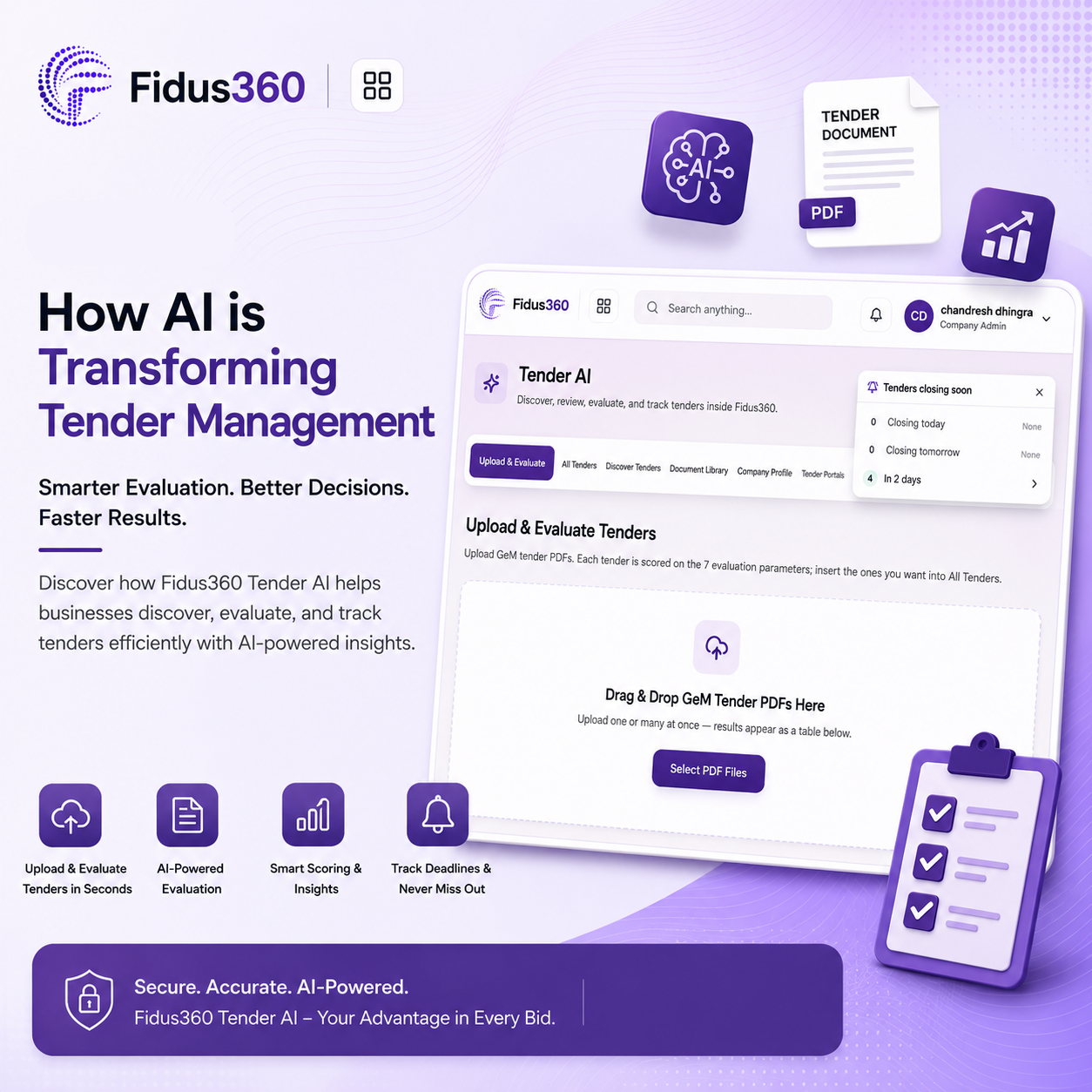
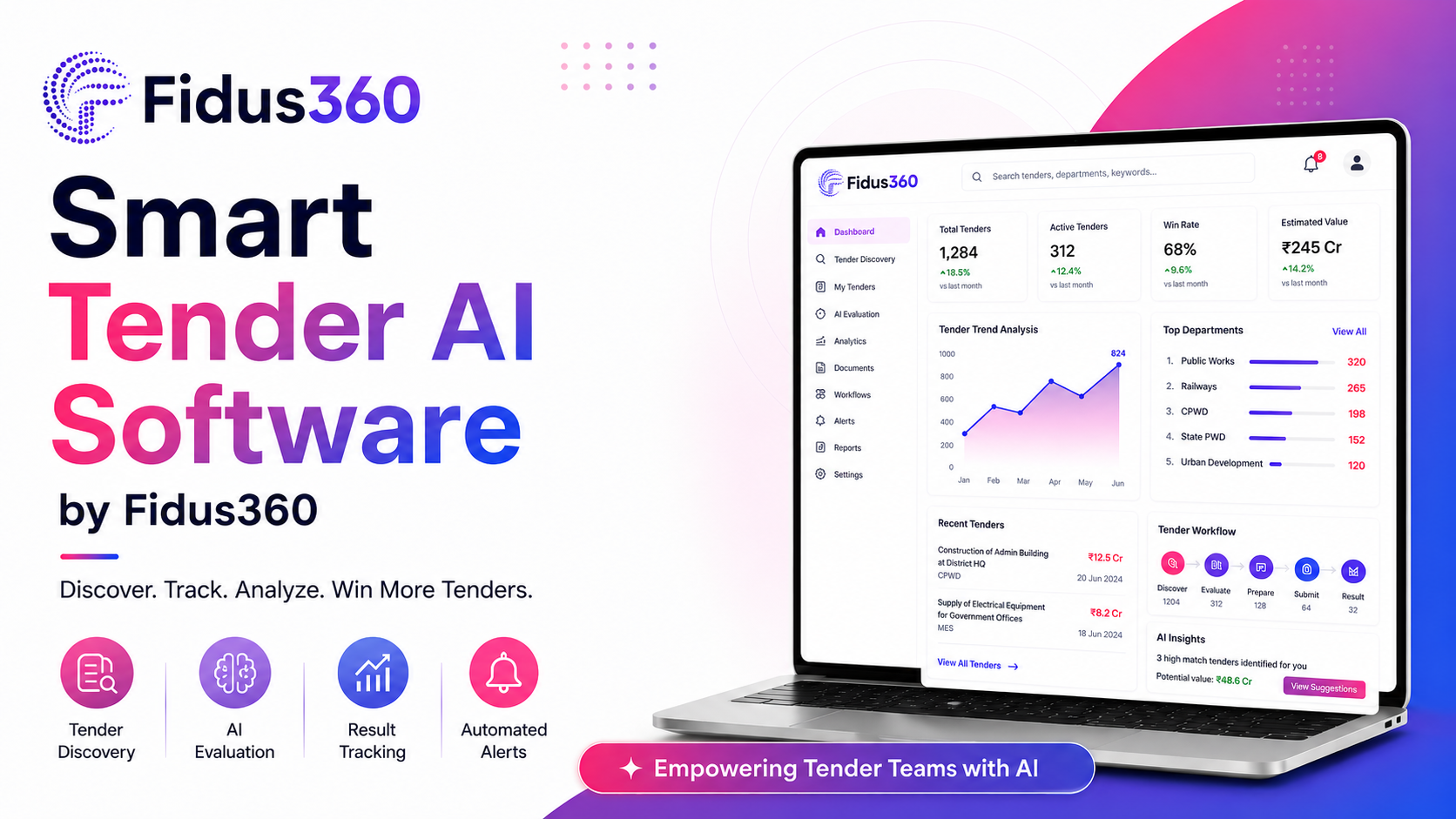
Businesses looking for AI-assisted tender workflows can explore Fidus360 Tender AI.
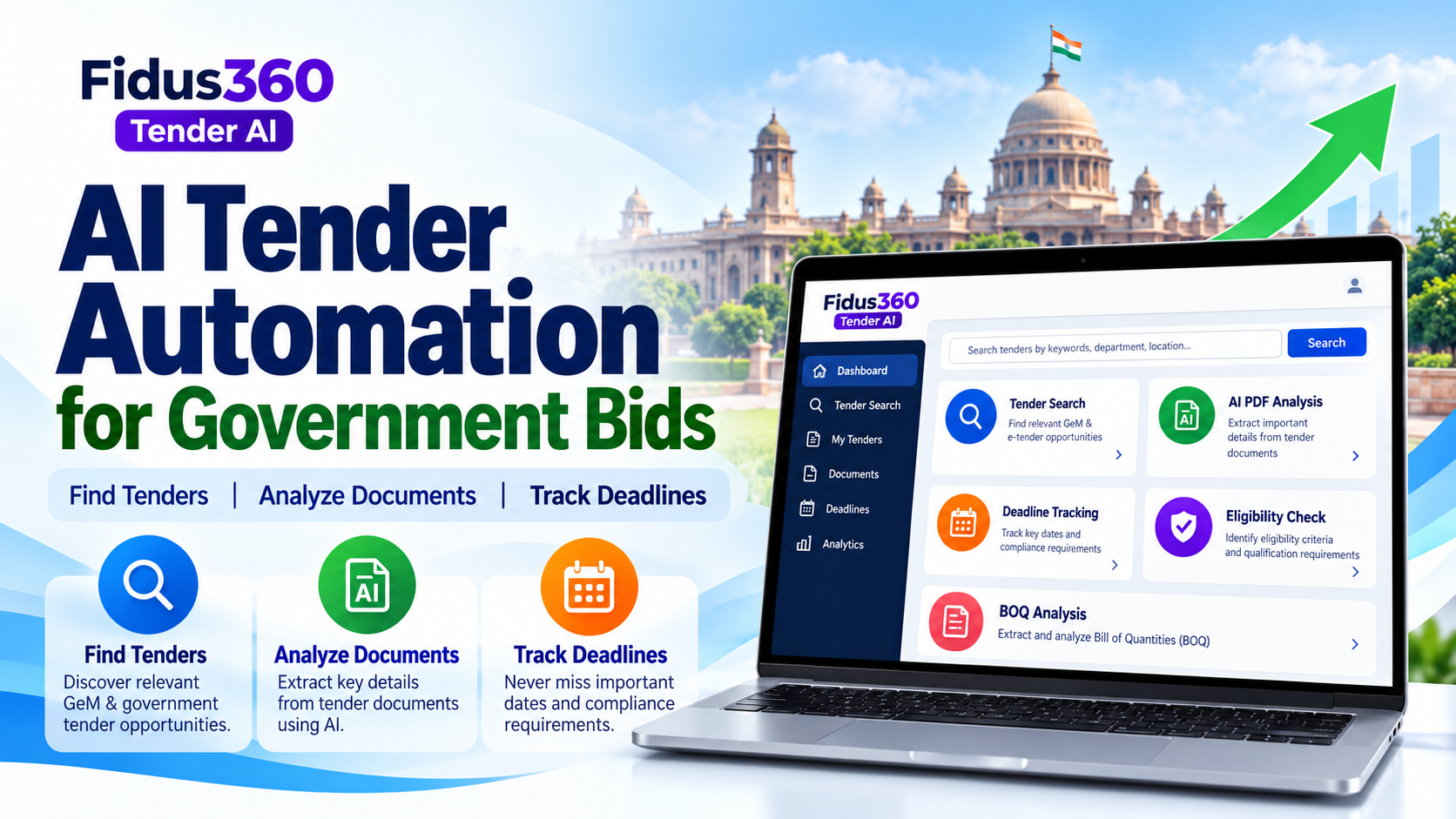
The platform's published product information describes capabilities for tender discovery, AI-assisted document analysis, eligibility and key-clause extraction, BOQ extraction, deadline tracking, and bid workspace organization. It also describes tender mining and bid-management workflows.
These capabilities are intended to help teams spend less time manually reviewing documents and organizing tender information.
Fidus360 publishes Tender AI pricing starting at ₹4,999 per company per month, with a monthly AI analysis allowance and additional credits for heavier usage. Confirm the latest pricing, applicable usage limits, and plan details directly on the official Tender AI page before making a purchase.
When evaluating the platform, businesses should verify the procurement sources they need, test document extraction on representative files, and confirm whether its workflow matches their internal bidding process.
The right software should solve a defined operational problem rather than simply add another application to the team's workflow.
Common Mistakes to Avoid When Selecting Tender Software
Choosing based only on price: A cheaper solution may lack the source coverage, document analysis, or workflow capabilities your team requires.
Assuming every tender is suitable: Opportunities should be assessed against eligibility, resources, profitability, and contractual commitments.
Trusting AI without verification: Extracted information should be checked against the original tender documents.
Ignoring official updates: Corrigenda and deadline changes must be reviewed through the relevant official source.
Overlooking employee adoption: Even capable software delivers limited value if the team does not maintain accurate records or follow the workflow.
Expecting guaranteed wins: Software can improve organization and decision-making, but it cannot guarantee contract awards.
Frequently Asked Questions
1. Which is the best tender tracking software in India in 2026?
The best solution depends on your industry, tender sources, document-analysis needs, budget, and team workflow. Compare source coverage, search relevance, deadline tracking, document processing, and pricing before selecting a platform.
2. What is the difference between tender tracking and tender management software?
Tender tracking focuses on monitoring opportunities, deadlines, and bid status. Tender management software may cover a broader process that includes discovery, eligibility checks, document preparation, approvals, evaluation, and related workflows.
3. Can AI analyze tender documents automatically?
AI-enabled tools can extract and summarize selected information from supported documents. Users should verify the results against the original tender, especially for eligibility, technical specifications, financial conditions, and contractual clauses.
4. Is GeM tender management software useful for small businesses?
It can be useful for small businesses that regularly participate in relevant GeM opportunities and need help organizing documents, deadlines, and bid preparation. Suitability depends on the business's tender volume, requirements, and software budget.
5. How much does tender tracking software cost in India?
Pricing varies according to source coverage, features, users, AI usage, and service requirements. Some solutions offer subscriptions, while others use customized or usage-based pricing. Check the total cost rather than comparing only the advertised starting price.
6. Does tender software guarantee successful bids?
No. Software can help businesses find opportunities, understand requirements, and manage bidding activities, but contract awards depend on eligibility, compliance, pricing, competition, and the buyer's evaluation criteria.
7. What should a business check before buying a tender AI tool?
Check supported sources, document-analysis accuracy, BOQ extraction, deadline monitoring, user permissions, pricing limits, and workflow suitability. Test the solution with real tender documents before committing to a long-term subscription.
Conclusion
Tendering can become difficult to manage when opportunity discovery, document review, deadlines, and bid preparation are spread across multiple tools. The right tender tracking software helps bring these activities into a more organized process.
For Indian businesses, the most important selection criteria include relevant procurement source coverage, accurate document analysis, practical deadline tracking, reliable workflows, and transparent pricing. AI capabilities can make information easier to review, but official documents and requirements must remain the final reference.
Whether you are a manufacturer, contractor, supplier, or service provider, start by identifying the biggest challenge in your current tendering process. Then evaluate software against that specific need.
If you want to explore AI-assisted tender discovery, document analysis, BOQ extraction, and bid tracking, visit Fidus360 Tender AI to review its features and current pricing.
A well-organized tender process will not guarantee every bid succeeds, but it can help your team make better-informed decisions, reduce avoidable administrative work, and manage opportunities more consistently.
Related apps