Why Construction Companies Are Switching to Digital DPR Software in 2026
Why Construction Companies Are Switching to Digital DPR Software in 2026 Construction projects are becoming more demanding, and keeping track of daily activities is not always…
Why Construction Companies Are Switching to Digital DPR Software in 2026
Construction projects are becoming more demanding, and keeping track of daily activities is not always easy. From managing workers and materials to monitoring deadlines and coordinating multiple teams, even a small communication gap can affect project progress.
Many construction companies still depend on handwritten registers, Excel sheets, and WhatsApp updates to track site activities. While these methods are familiar, managing scattered information becomes increasingly challenging as projects grow.
In 2026, more construction businesses are exploring digital tools to simplify reporting and improve visibility into their projects.
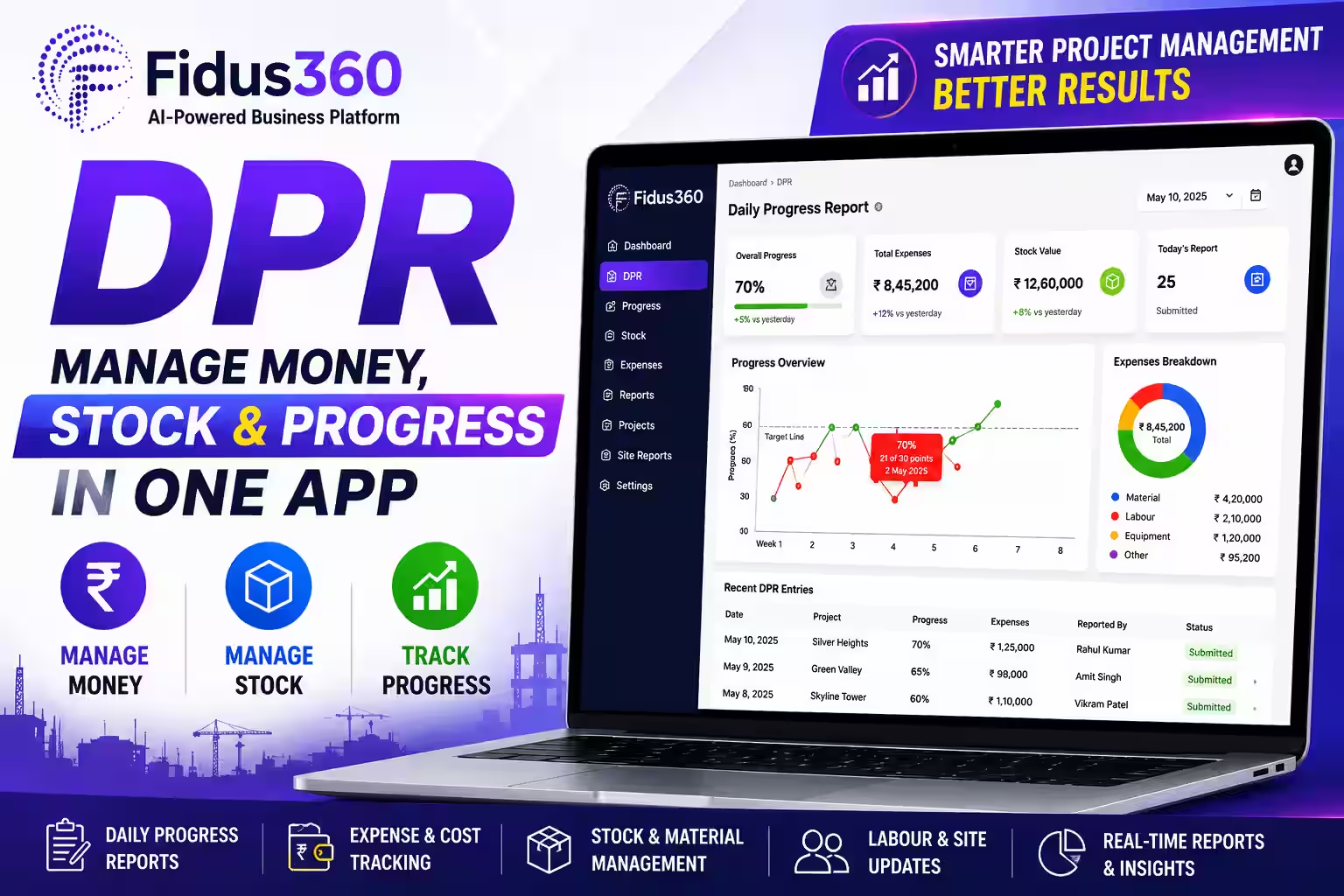
Solutions such as Fidus360 DPR are part of this shift, helping construction teams move towards a more organised approach to daily progress reporting.
But why are businesses reconsidering traditional reporting methods, and what difference can digital tools make?
What Is Digital DPR Software in Construction?
A Daily Progress Report (DPR) is a record of activities performed at a construction site during a particular day.
It helps project managers, contractors, and site engineers understand what work has been completed, what resources were used, and which activities need attention.
Traditionally, these details are written in registers or maintained in spreadsheets. Digital reporting software brings this information into an organised system where teams can record, review, and access project updates.
A typical construction DPR includes:
- Daily work activities and completed quantities
- Labour attendance and workforce allocation
- Materials received and consumed
- Machinery and equipment usage
- Site photographs and observations
- Work delays and pending activities
- Safety-related updates
Having these records in one place makes it easier for teams to follow project developments and maintain continuity between working days.
Why Traditional Construction Reporting Is Becoming Difficult
Manual reporting is not necessarily ineffective. Many construction businesses have managed projects successfully using paper registers and spreadsheets.
However, as the number of workers, contractors, and project locations increases, maintaining consistent information becomes harder.
For example, a site supervisor might send daily progress photographs through WhatsApp, while labour details are recorded in Excel and material information is maintained separately.
When the project manager needs a complete update, information must be collected from several sources.
This approach can lead to missing records, delayed updates, duplicate entries, and unnecessary administrative work.
Digital systems aim to reduce these challenges by establishing a consistent reporting process.
7 Reasons Construction Companies Are Adopting Digital DPR Software
1. Daily Reporting Becomes More Organised
Preparing a daily construction report often involves collecting information from different team members.
Site engineers need to record activities, verify quantities, gather photographs, and communicate updates to project managers.
Using a structured digital reporting process allows teams to enter essential information in a consistent format.
Instead of searching through multiple files, managers can refer to organised daily records.
This can reduce repetitive administrative tasks and make information easier to retrieve when required.
2. Project Managers Get Better Visibility Into Site Activities
One of the biggest challenges in construction management is understanding what is happening on-site without being physically present throughout the day.
Consider a building project where the team planned to complete reinforcement work on a particular floor.
If only part of the activity is finished, the project manager needs to understand why.
Was there a shortage of workers? Did materials arrive late? Was another activity preventing the work from continuing?
A timely daily report can provide these answers.
With better access to site information, managers can identify potential problems earlier and coordinate corrective action.
3. Labour and Material Records Become Easier to Manage
Labour and materials are major contributors to construction project costs.
Without reliable daily records, project teams may struggle to understand how resources are being used.
For example, if a particular activity consistently requires more workers than expected, management needs accurate information to investigate the reason.
Similarly, maintaining material consumption records can help teams identify unexpected usage or shortages.
Digital documentation makes it easier to review resource information over time.
This does not automatically eliminate waste, but it provides a stronger foundation for making informed decisions.
4. Communication Between Teams Improves
Construction projects involve several stakeholders, including site engineers, contractors, project managers, suppliers, and business owners.
Keeping everyone informed becomes difficult when updates are distributed across different communication channels.
A shared reporting process helps teams work with consistent project information.
For example, if concrete work is postponed because a required inspection is pending, the delay can be recorded and brought to management's attention.
Instead of relying entirely on verbal communication, the concerned teams have a documented reference.
Clear communication can improve coordination and reduce misunderstandings about project activities.
5. Delays Can Be Identified Earlier
Construction delays may result from weather conditions, labour shortages, material supply problems, equipment breakdowns, or changes in project requirements.
Although reporting software cannot prevent every delay, it can make problems more visible.
When daily reports consistently record planned activities, completed work, and reasons for pending tasks, managers can recognise recurring issues.
For example, if a particular construction activity remains incomplete for several consecutive days, the project manager can investigate the problem rather than discovering it during a later review.
Early identification creates an opportunity to respond before smaller issues affect additional activities.
6. Site Photographs Provide Better Progress Documentation
Photographs are useful for understanding construction progress, especially when project managers oversee multiple locations.
Written updates may explain that shuttering or reinforcement work is complete, but photographs provide additional context.
When images are linked to the relevant project and reporting date, teams can review site conditions more easily.
This can support internal progress meetings, client discussions, and historical project reviews.
Photographs should still be accompanied by accurate descriptions and appropriate verification, particularly where work quality or contractual completion is concerned.
7. Managing Multiple Construction Sites Becomes More Practical
For contractors managing several construction sites, collecting separate progress reports can become time-consuming.
Each project may have different teams, deadlines, materials, and reporting requirements.
A centralised reporting approach makes it easier to organise project information and compare progress across locations.
Management can focus on sites requiring immediate attention rather than spending excessive time collecting updates.
This becomes especially valuable as a construction business expands its operations.
Manual Reporting vs Digital Reporting: What Changes?
| Area | Traditional Reporting | Digital Reporting |
|---|---|---|
| Daily updates | Registers and Excel sheets | Structured digital entries |
| Information sharing | Calls, messages, and email | Shared reporting workflows |
| Site photographs | Stored in separate folders | Can be linked to daily records |
| Historical information | Requires manual searching | Easier to organise and retrieve |
| Multi-site management | Separate reporting processes | Potential centralised visibility |
| Progress review | Manual comparison | More structured monitoring |
The right approach depends on project size, team requirements, and the complexity of daily operations.
For very small projects, spreadsheets may remain practical. However, growing businesses often benefit from consistent digital documentation.
How Fidus360 Fits Into Modern Construction Reporting
Construction companies need technology that supports their day-to-day operations rather than adding unnecessary complexity.
Fidus360 offers a Daily Progress Report (DPR) software solution as part of its business application platform, designed to support a more organised approach to project reporting.
For construction teams exploring digital transformation, the goal is to make daily site information easier to manage and use.
A practical DPR workflow should help teams maintain regular activity records, communicate progress, and provide management with meaningful project information.
The most important consideration is choosing a system that fits existing work processes and is simple enough for employees to use consistently.
After all, even the most advanced reporting platform provides limited value if the information entered is incomplete or inaccurate.
What Should Construction Companies Look for in DPR Software?
Before selecting a digital reporting system, businesses should evaluate their actual operational needs.
Some important considerations include:
Ease of use: Site engineers and supervisors should be able to prepare reports without complicated procedures.
Relevant reporting fields: The system should accommodate daily work details, resource usage, issues, and project-specific requirements.
Progress documentation: Teams should be able to maintain clear records and supporting evidence of completed activities.
Management visibility: Project managers should have a practical way to review site updates.
Data accessibility: Authorised users should be able to find historical project information when needed.
Scalability: The reporting process should remain manageable as project activities and team sizes increase.
Security: Access to sensitive project and business information should be controlled appropriately.
Companies should also evaluate software costs, employee training requirements, customer support, and compatibility with existing workflows.
How to Successfully Introduce Digital DPR Reporting
Switching from manual records to a digital system does not need to be complicated.
Construction businesses can begin with a few practical steps.
Step 1: Understand the existing process. Review how site information is currently recorded and identify common reporting problems.
Step 2: Start with one project. Introduce digital reporting on a selected site before implementing it across the organisation.
Step 3: Train the team. Ensure site engineers and supervisors understand what information should be recorded and why accuracy matters.
Step 4: Establish a reporting schedule. Decide when reports should be submitted, reviewed, and approved.
Step 5: Monitor the results. Evaluate whether updates are more consistent, information is easier to access, and site issues are being identified sooner.
A gradual transition gives employees time to adapt and helps management identify improvements before expanding the system.
The Future of Construction Reporting Beyond 2026
Construction reporting is evolving alongside broader developments in digital project management.
Technologies such as artificial intelligence, connected project dashboards, and automated data analysis may create new opportunities for construction businesses.
In the future, advanced systems could help project teams summarise daily activities, identify unusual progress patterns, and connect site reports with scheduling and resource planning.
However, technology is only one part of successful construction management.
Accurate information, clear responsibilities, timely communication, and proper decision-making will remain essential.
For many construction companies, establishing reliable daily reporting practices is a practical first step towards broader digital transformation.
Conclusion
Construction companies are increasingly recognising the importance of accurate and accessible project information.
Manual reporting methods may still work for certain projects, but managing multiple teams, resources, and deadlines often requires a more structured approach.
Digital DPR software can help businesses improve documentation, strengthen communication, and gain better visibility into daily site activities.
Fidus360 supports this move towards more organised construction reporting, providing an option for businesses exploring digital tools for their operations.
Ultimately, successful project management is not about collecting more data. It is about making the right information available to the right people at the right time.
For construction companies planning their next stage of growth, improving daily reporting can be a meaningful place to begin.
Explore Fidus360: www.fidus360.com
Frequently Asked Questions (FAQs)
1. What is the purpose of DPR software in construction?
DPR software helps construction teams record daily site activities, monitor work progress, document resource usage, and share important project updates.
2. Why are construction companies adopting digital reporting tools?
Businesses are exploring digital reporting to reduce repetitive paperwork, improve communication, organise project information, and gain better visibility into ongoing work.
3. Can small construction companies benefit from DPR software?
Yes. Small contractors may find digital reporting useful when managing several activities, subcontractors, or projects. The benefits depend on their operational requirements.
4. Can digital DPR software prevent construction delays?
Reporting software cannot guarantee that delays will be prevented. However, accurate daily updates can help managers identify issues earlier and coordinate appropriate action.
5. Is Excel sufficient for managing construction daily reports?
Excel may work for small projects with simple reporting needs. Dedicated software can become more useful when teams require consistent workflows, shared records, and centralised reporting.
6. How can construction companies get started with Fidus360?
Construction companies interested in digital daily progress reporting can visit the Fidus360 website to explore the available solution and evaluate whether it meets their project management needs.
Related apps